I. Introduction
The fashion industry stands at a critical crossroads, where the traditional ‘take-make-dispose’ model is being challenged by a new wave of sustainable fashion designers who are revolutionizing how we think about clothing. As someone who’s spent two decades covering the fashion industry, I’ve witnessed firsthand the devastating environmental impact of fast fashion – from water pollution to textile waste that could fill Sydney Harbor annually.
Sustainable fashion isn’t just a trend; it’s a fundamental shift in how we create, consume, and value clothing. These innovative designers are reimagining fashion through a lens of environmental stewardship and social responsibility. They’re proving that style doesn’t have to come at the expense of our planet’s health.
I remember interviewing a pioneering sustainable designer in New York who transformed her entire business model after witnessing the textile waste in Dhaka’s waterways. Her story, like many others in the $2.5 trillion global fashion industry, represents a growing movement of creators who understand that tomorrow’s fashion must be built on sustainable principles.
The environmental statistics are staggering – fashion accounts for up to 10% of global carbon emissions and is the second-largest consumer of water worldwide. But rather than dwell on these sobering figures, sustainable designers are turning these challenges into opportunities for innovation. They’re creating beautiful, lasting pieces that honor both craftsmanship and our environment.
From small studios in Brooklyn to established ateliers in Manhattan, sustainable fashion designers are proving that eco-conscious clothing can be both luxurious and responsible. Their work isn’t just about using organic materials or reducing waste; it’s about fundamentally restructuring how we interact with our wardrobes and understanding the true cost of what we wear.
II. Innovative Materials and Sourcing
At the heart of sustainable fashion lies a revolutionary approach to materials and sourcing that’s transforming the industry. I’ve seen remarkable innovations emerge, from mushroom leather to fabrics made from recycled ocean plastics. These next-generation materials aren’t just alternatives; they’re often superior to their conventional counterparts.
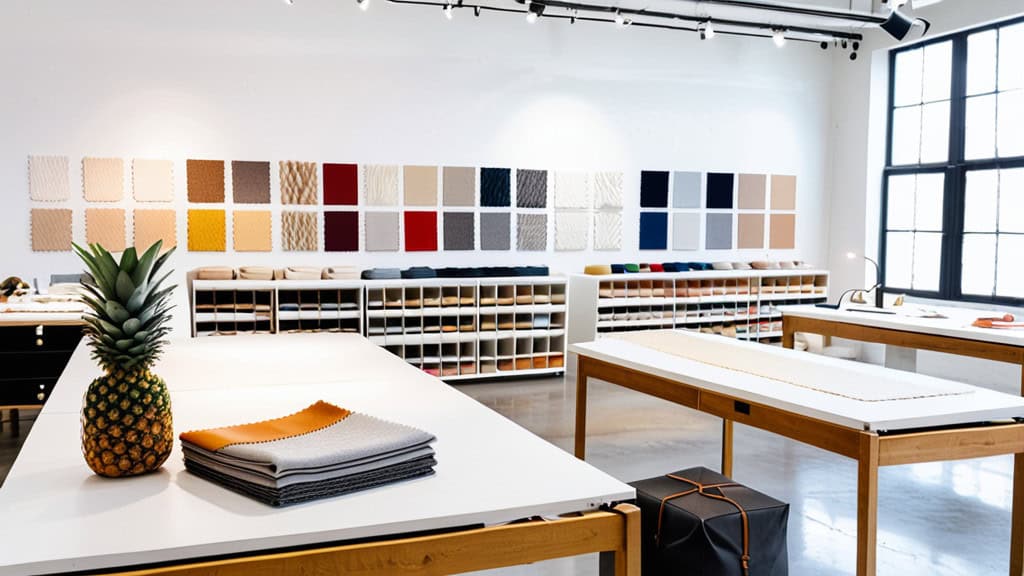
During my recent visit to a sustainable fashion studio in NYC, I watched designers working with Piñatex, a leather alternative made from pineapple leaf fibers. The material’s durability and unique texture challenged everything I thought I knew about sustainable materials. Similarly, designers are embracing organic cotton, hemp, and Tencel – materials that require significantly less water and fewer chemicals to produce.
Local sourcing has become a cornerstone of sustainable fashion, with designers building relationships with nearby farms and mills. One designer I interviewed sources all her wool from upstate New York sheep farmers, creating a transparent supply chain that customers can actually visit. This ‘farm-to-closet’ movement is gaining momentum, particularly among sustainable fashion companies in urban centers.
Zero-waste design techniques have evolved from experimental concepts to practical methodologies. Designers are using computer-aided pattern cutting to maximize fabric usage, while others employ traditional Japanese furoshiki folding techniques to create garments without any waste. I’ve seen pattern pieces fit together like perfect puzzles, leaving no scraps behind.
The sourcing revolution extends to deadstock fabrics – high-quality materials that larger manufacturers have discarded. Sustainable designers are breathing new life into these forgotten textiles, creating limited edition pieces that prevent perfectly good fabric from ending up in landfills. This approach not only reduces waste but also creates unique garments with their own stories to tell.
What’s particularly exciting is how these innovative materials and sourcing methods are becoming more accessible. Where once sustainable materials were prohibitively expensive, increased demand and improved technology have made them more viable for designers at various price points. This democratization of sustainable materials is crucial for the movement’s continued growth and impact.

III. Ethical Production Methods
The backbone of sustainable fashion extends beyond eco-friendly materials to encompass ethical production methods that prioritize human dignity and craftsmanship. Having visited numerous workshops and production facilities, I’ve witnessed how ethical fashion production transforms not just garments, but entire communities.
Fair labor practices are non-negotiable for sustainable designers. In contrast to fast fashion’s race to the bottom, these creators ensure living wages, safe working conditions, and reasonable hours for their workers. I recently spoke with a designer in Brooklyn who maintains a small team of skilled artisans, paying them nearly triple the industry standard. Her workshop feels more like a collaborative studio than a traditional factory.
Transparency has become the new currency in sustainable fashion. Many designers are embracing radical transparency, sharing their entire production process online. From the origin of their raw materials to the names of their sewers, everything is documented and accessible to customers. This level of openness creates accountability and builds trust with increasingly conscious consumers.
Small-batch production, once seen as a limitation, is now recognized as a strength. By producing in limited quantities, designers can maintain quality control, reduce waste, and create pieces that truly reflect their vision. I’ve observed how this approach allows for greater flexibility and responsiveness to customer feedback, leading to better products and stronger customer relationships.
Artisanal craftsmanship plays a crucial role in ethical production. Many sustainable designers are reviving traditional techniques that were nearly lost to industrialization. Hand-weaving, natural dyeing, and manual embroidery not only create unique, high-quality garments but also preserve cultural heritage and provide meaningful employment for skilled craftspeople.
The impact of ethical production extends far beyond the garment itself. When a designer pays fair wages, that money circulates in local communities, supporting families and enabling educational opportunities. I’ve seen firsthand how ethical production facilities become community hubs, offering training programs and creating generational knowledge transfer.
These ethical production methods might mean higher price points, but they reflect the true cost of clothing made with respect for both people and planet. As one designer told me, ‘Every stitch we sew is a statement about the world we want to create.’
IV. Circular Fashion Initiatives
The concept of circular fashion represents perhaps the most transformative shift in how we think about clothing. Unlike the linear ‘take-make-dispose’ model, circular fashion creates a closed loop where nothing goes to waste. I’ve watched this movement grow from a fringe concept to a crucial element of sustainable design.
Rental and resale programs have exploded in popularity, particularly in fashion-forward cities like New York. I recently collaborated with a sustainable designer who launched a rental platform for her high-end pieces, allowing customers to experience luxury sustainable fashion without the full investment. These programs extend the lifespan of garments while making sustainable fashion more accessible to a broader audience.
Take-back schemes are becoming increasingly sophisticated. Innovative designers are implementing programs where customers can return worn items for recycling or upcycling. One designer I interviewed creates new limited-edition pieces entirely from garments returned through their take-back program, transforming what would have been waste into sought-after collectibles.
Repair services are being elevated to an art form. Rather than hiding signs of mending, sustainable designers are celebrating repair as part of a garment’s journey. I’ve seen workshops where visible mending techniques create beautiful patterns that tell the story of a garment’s life. This approach challenges our throwaway culture and reframes repair as a desirable feature rather than a last resort.
End-of-life considerations are now being built into garments from the design phase. Sustainable designers are creating pieces that can be easily disassembled for recycling or biodegrading. I remember visiting a studio where every component, from buttons to thread, was chosen specifically for its ability to return safely to the environment or be recycled effectively.
The most exciting aspect of circular fashion initiatives is how they’re changing consumer behavior. People are beginning to view their clothing as part of a continuous cycle rather than disposable items. When a designer creates a beautiful piece that can be rented, resold, repaired, and ultimately recycled, it changes our entire relationship with fashion.
These circular initiatives often require significant investment and infrastructure, but they’re proving to be both environmentally and economically sustainable in the long run. As one designer told me, ‘We’re not just creating clothes anymore – we’re creating systems that will define the future of fashion.

V. Technology and Innovation
Technology is revolutionizing how sustainable fashion designers approach their craft, creating unprecedented opportunities for innovation and efficiency. Having followed these developments closely, I’ve seen how digital transformation is reshaping every aspect of sustainable fashion design.
Digital design tools have become game-changers in reducing waste. 3D visualization software allows designers to perfect their patterns virtually before cutting a single piece of fabric. I recently visited a sustainable fashion studio in NYC where designers were using CLO3D to simulate garment draping and fit, eliminating the need for multiple physical samples. This technology alone has helped reduce fabric waste by up to 40%.
Blockchain technology is bringing unprecedented transparency to the fashion supply chain. Through blockchain applications, designers can now track their materials from source to final product, providing customers with verifiable proof of sustainability claims. I’ve seen how this technology helps build trust and accountability, particularly important for sustainable fashion companies in NYC’s competitive market.
Smart textiles are pushing the boundaries of what’s possible in sustainable fashion. Designers are experimenting with fabrics that can change color without chemical dyes, self-repair, or even capture solar energy. During a recent interview, a designer showed me a prototype of a biodegradable fabric that adapts to temperature changes, potentially reducing the need for multiple seasonal wardrobes.
3D printing has opened up new possibilities for zero-waste production. Some designers are creating entire garments through additive manufacturing, using biodegradable materials that can be recycled into new printing filament. The precision of 3D printing means every piece can be made to order, eliminating overstock and reducing waste.
Artificial intelligence is being employed to optimize inventory management and predict trends, helping sustainable designers produce more efficiently. Machine learning algorithms analyze customer data to forecast demand accurately, ensuring production matches actual needs rather than speculative bulk ordering.
The integration of augmented reality (AR) is transforming how customers interact with sustainable fashion. Virtual try-ons reduce return rates and their associated carbon footprint, while AR apps help customers understand the story behind their garments, from material sourcing to manufacturing processes.
These technological innovations aren’t just making sustainable fashion more efficient; they’re making it more accessible and appealing to mainstream consumers. As one designer told me, ‘Technology is the bridge between sustainable ideals and practical reality.’

VI. Conclusion
The sustainable fashion movement, driven by innovative designers and conscious consumers, is fundamentally reshaping the fashion industry. As research shows, this transformation isn’t just desirable – it’s essential for our planet’s future. Through my years of covering the industry, I’ve witnessed sustainable fashion evolve from a niche concept to a powerful force for change.
The impact of sustainable designers extends far beyond their individual collections. They’re pioneering new materials, establishing ethical production standards, and creating circular systems that challenge traditional fashion’s wasteful practices. Their work demonstrates that profitability and sustainability aren’t mutually exclusive – in fact, they’re increasingly interdependent.
Looking ahead, the future of sustainable fashion appears both challenging and promising. Emerging technologies and innovative business models are making sustainable fashion more accessible and scalable than ever before. The designers leading this movement are proving that fashion can be both beautiful and responsible, creative and conscious.
For consumers, the path forward is clear: our choices matter. By supporting sustainable fashion designers, we’re not just buying clothes – we’re investing in a better future for the industry. Whether it’s choosing pieces from sustainable fashion companies in NYC or embracing circular fashion initiatives, every purchase is a vote for the kind of world we want to live in.
The transformation of the fashion industry won’t happen overnight, but the momentum is undeniable. Sustainable designers are showing us that fashion can be a force for positive change, creating beautiful pieces that respect both people and planet. Their work isn’t just about making better clothes – it’s about reimagining our relationship with fashion itself.
As we look to the future, one thing is certain: sustainable fashion designers aren’t just following trends – they’re creating the new normal. Their vision of fashion, built on innovation, responsibility, and respect, is setting the standard for generations to come. The question isn’t whether sustainable fashion will become the industry standard, but how quickly we’ll get there.
The time for half-measures has passed. The future of fashion is sustainable, and it’s being shaped by designers who dare to challenge convention, embrace innovation, and prioritize our planet’s wellbeing. Their work reminds us that true luxury lies not in excess, but in consciousness, creativity, and care for our shared future.